
The 7 Levels of Cake - Redesigning a Complex Feature
A strategic redesign of a stalled multi-person authentication feature, using structured facilitation, risk framing, and phased delivery planning to move the work into execution.

Project Overview
As lead designer, I took ownership of a critical multi-person authentication feature that had been inactive for two years. The work focused on re-establishing direction, aligning stakeholders, and defining a realistic implementation path.
I combined product design, engineering awareness, and creative facilitation to move the team from ambiguity into an executable roadmap.
Duration: April 10, 2024 - May 19, 2024
Tools: Figma, Mural
The Challenge
Users needed dependable multi-person authentication for high-impact actions. Despite clear product importance, the initiative had stalled with outdated design artifacts, unresolved assumptions, and an incomplete proof of concept.
My Role
Lead Designer, accountable for:
- Project leadership and stakeholder management
- User research and empathy mapping
- Workshop facilitation
- Concept development and iteration
- User journey mapping
- Roadmap creation
Process
1. Reassessment and Alignment
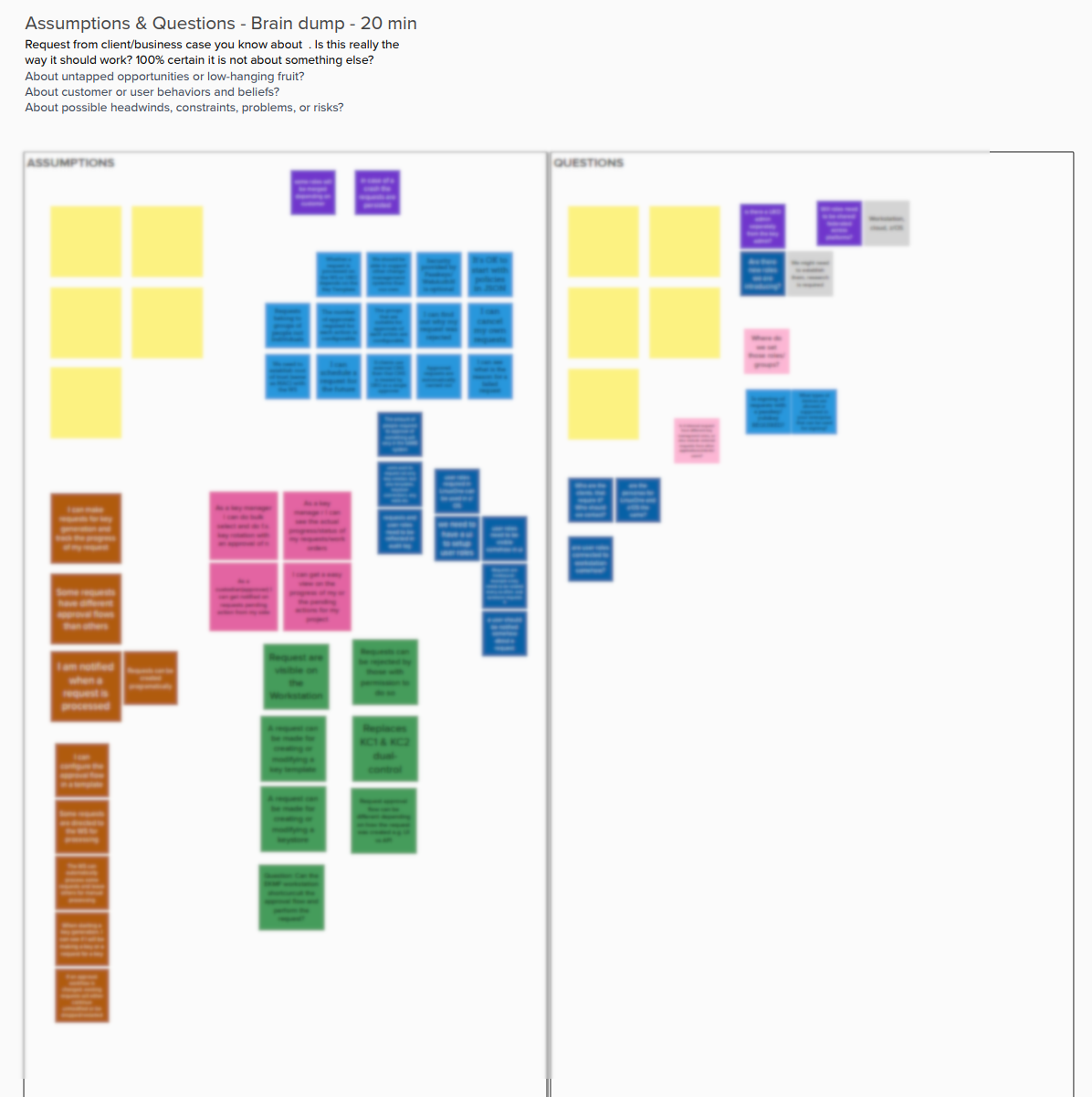
I retired outdated proposals and led an alignment workshop. Through an assumptions-and-questions exercise, we identified material gaps in team understanding, scope, and success criteria.
2. Prioritization and Risk Assessment
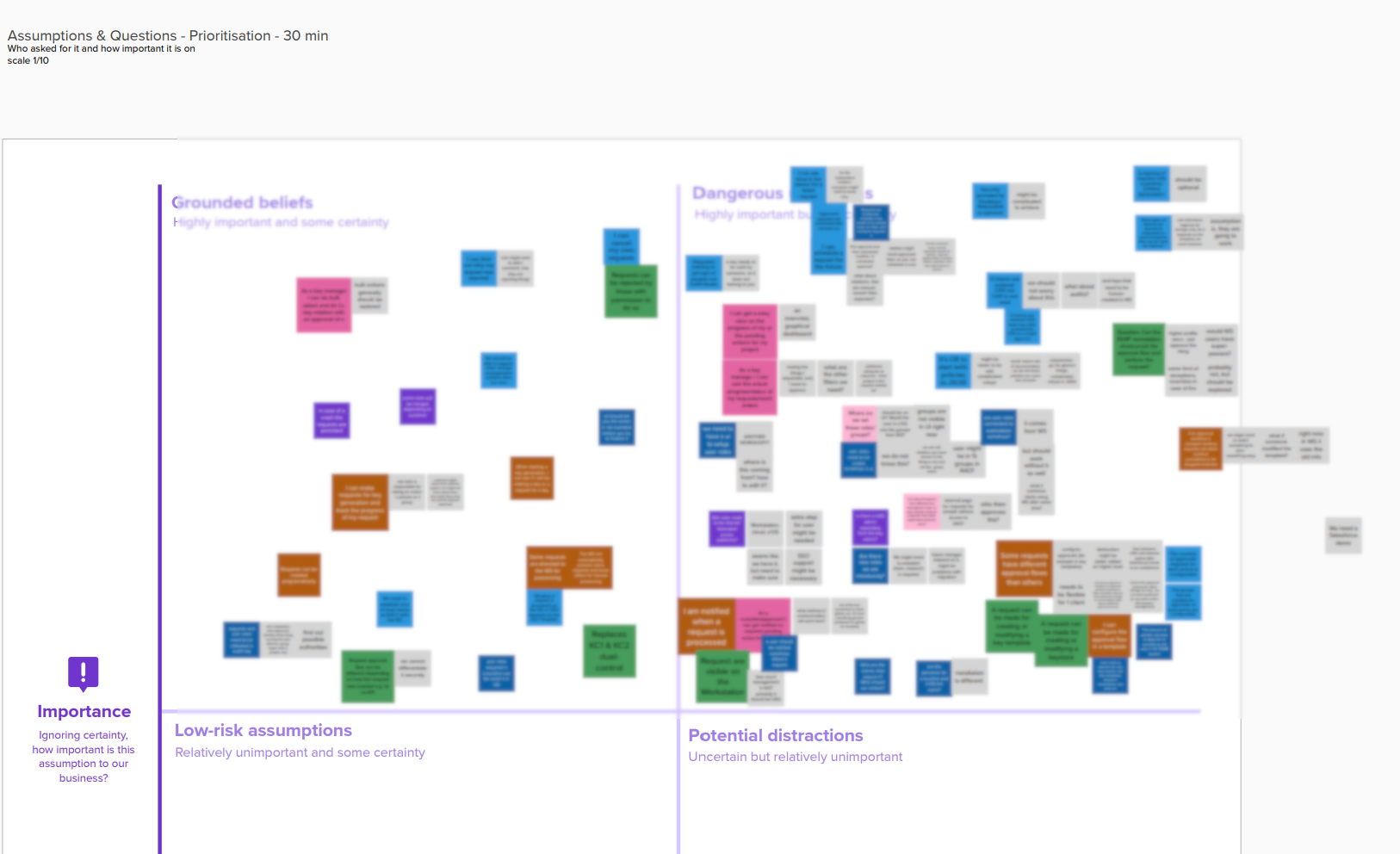
We mapped initiatives by importance versus certainty. This exposed high-risk unknowns early and gave the team a defensible basis for sequencing decisions.
3. User Journey Mapping
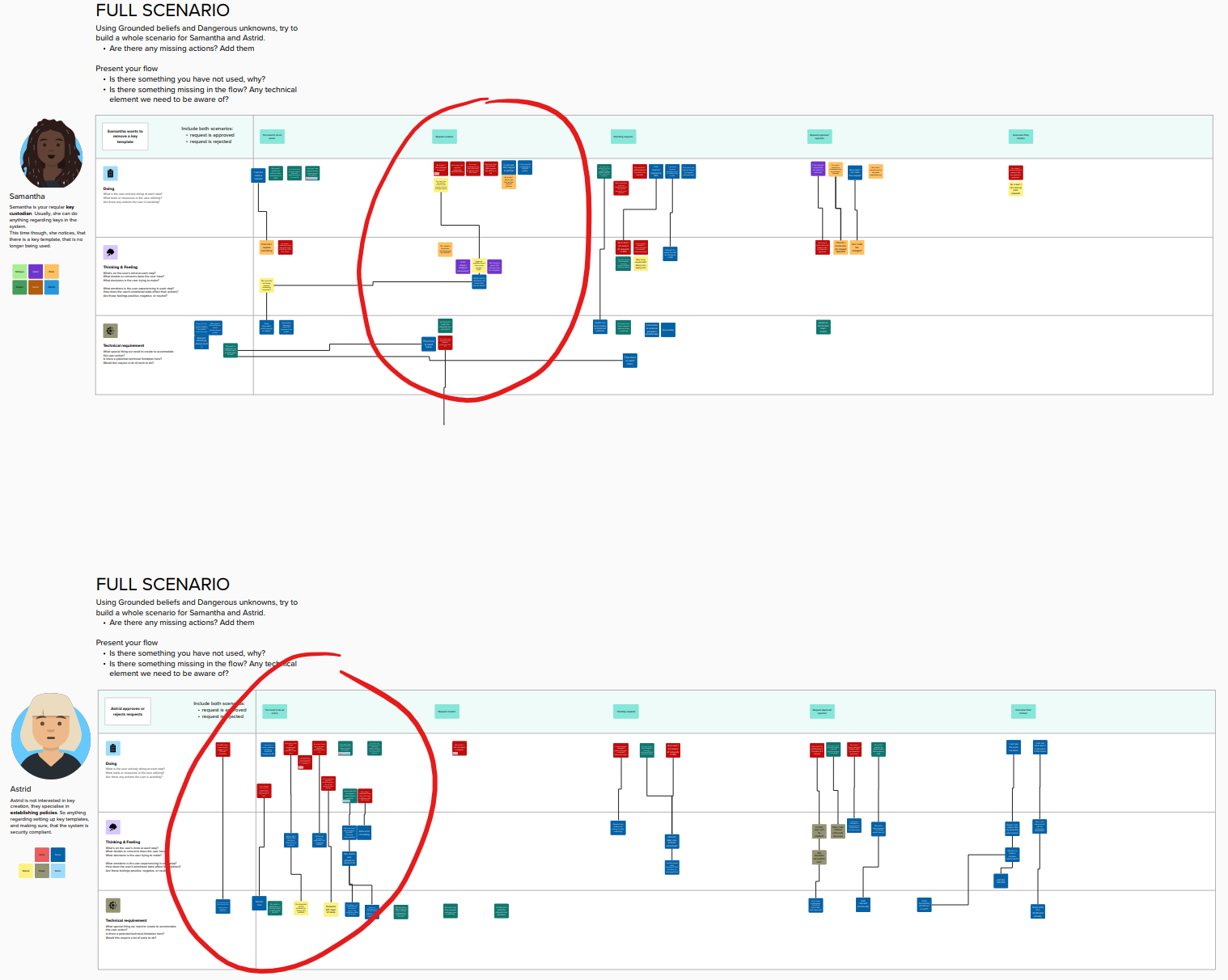
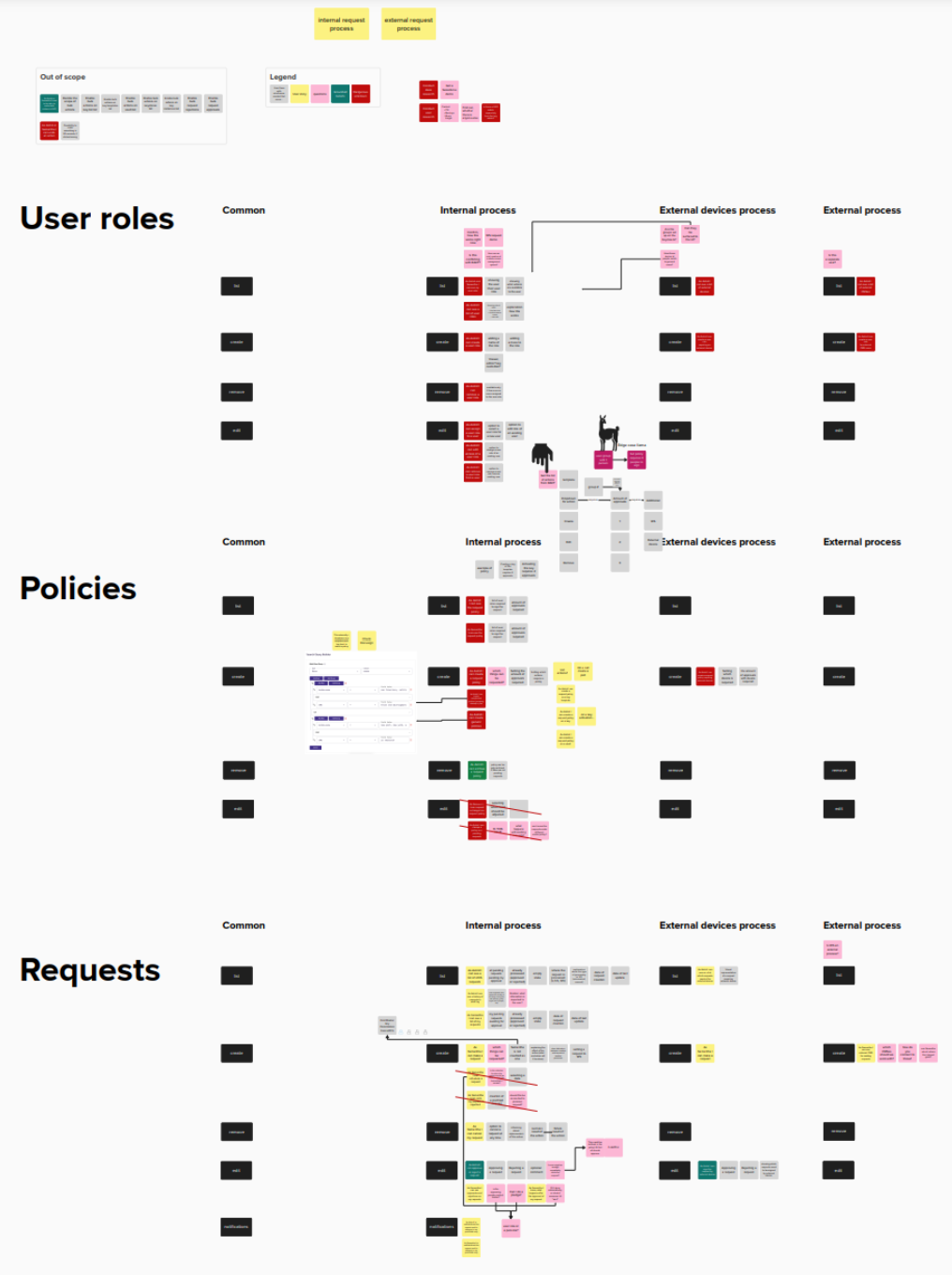
I facilitated journey mapping for key personas to make dependencies, decision points, and failure paths visible across the end-to-end flow.
4. Innovative Roadmapping: The 7 Levels of Cake
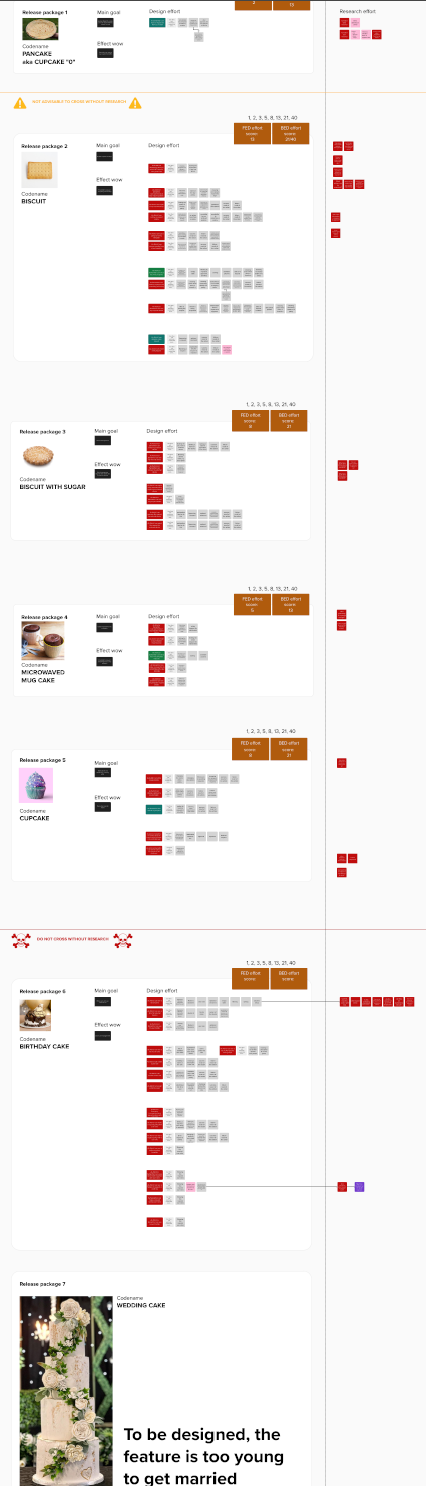
To make delivery executable, I translated complexity into a seven-level progression model:
- Pancake: Quick, basic implementation
- Biscuit: Small but promising feature set
- Biscuit with sugar: Enhanced basic functionality
- Microwaved mug cake: Additional crude functionalities
- Cupcake: Polished core experience
- Birthday cake: Multi-user role support
- Wedding cake: Long-term vision (undefined)
5. User Research Preparation
With a clearer plan in place, we prepared targeted interviews to validate core assumptions and refine release priorities.
Outcomes and Impact
This approach enabled the team to:
- Align stakeholders on a shared vision
- Break down a complex feature into manageable, iterative releases
- Identify and prioritize critical unknowns
- Create a flexible roadmap that balanced user needs with development constraints
- Replace assumption-driven debate with evidence-driven sequencing
Key Learnings
- The power of structured workshops in uncovering misalignments
- The importance of breaking down complex features into smaller, achievable goals
- The value of visualizing user journeys to identify pain points and complexities
- The effectiveness of creative roadmapping techniques in communicating project vision
Conclusion
This project demonstrates design leadership beyond interface output: reframing ambiguity, aligning cross-functional teams, and creating an actionable path from concept to delivery for a high-risk enterprise feature.