
Redesigning Figma Workflow for Large-Scale Product Teams
A systems-level redesign of fragmented Figma operations to improve scalability, reduce decision friction, and create a reliable collaboration model for cross-functional product teams.

Project Overview
This project addressed a structural operating issue in design delivery: Figma workflows had become difficult to scale across teams, products, and parallel initiatives.
Over time, fragmented file patterns created collaboration drag, elevated cognitive load, and weakened confidence in the source of truth for key design decisions.
The objective was not incremental cleanup, but a scalable design operating model that could support sustained team growth.
The Problem
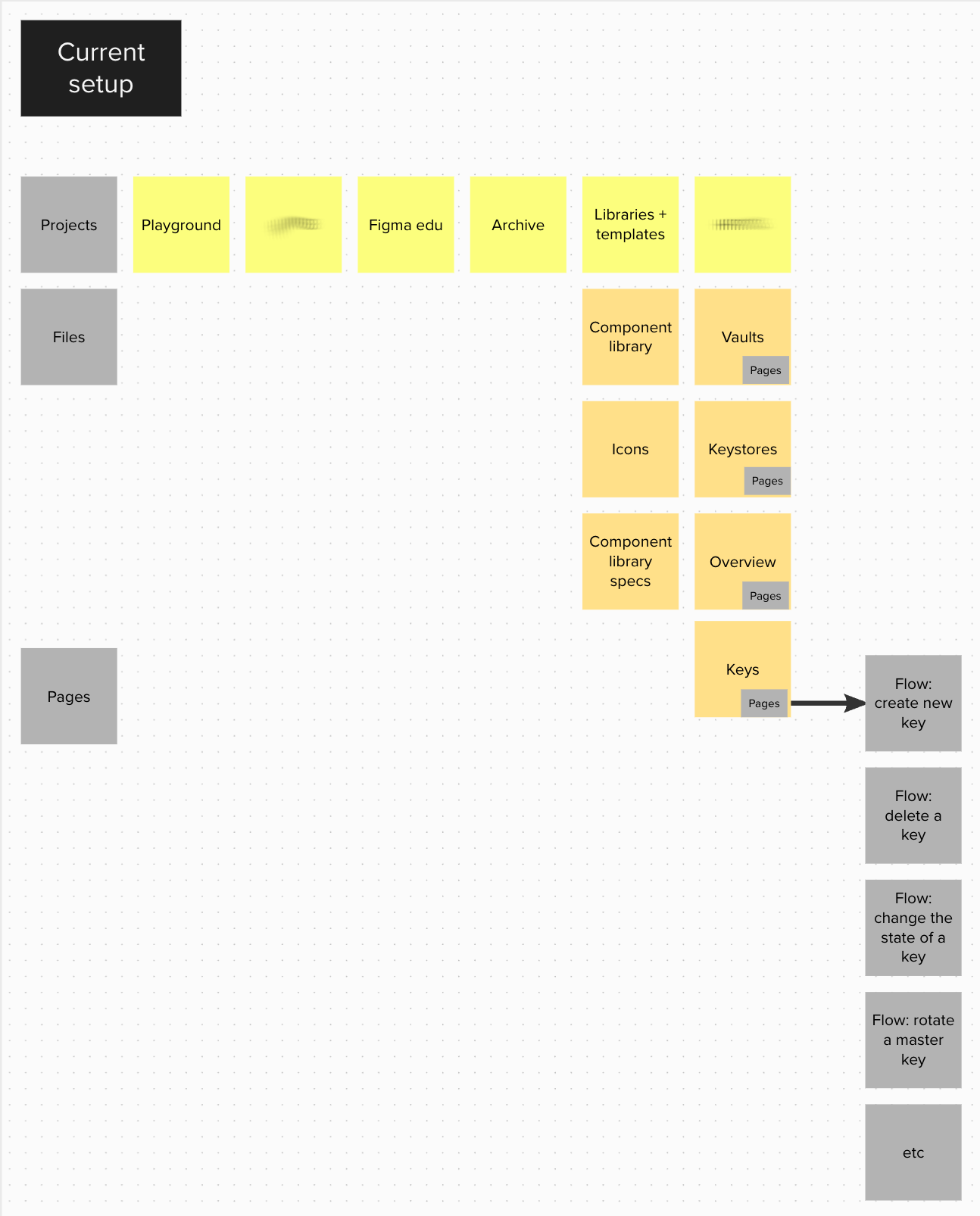
The existing Figma environment could no longer support the scale and complexity of ongoing product work.
- Difficulty identifying current and authoritative design sources
- Performance degradation and file-size constraints
- Duplicated or conflicting design states across files
- Unclear ownership of decisions and updates
- No structured versioning or decision traceability
- Collaboration friction in multi-designer streams
My Role
I was responsible for analyzing the existing workflow and designing a scalable system that could support both fast-moving startup projects and structured corporate design environments.
Drawing on engineering and product design experience, I treated the workflow as an operating system problem instead of a file organization exercise.
Responsibilities included:
- Workflow and system analysis
- Identifying collaboration bottlenecks
- Designing new information architecture for Figma files
- Facilitating alignment across designers
- Defining implementation approach and rollout strategy
Discovery and Problem Framing
Early analysis showed this was not a file hygiene issue, but a scaling issue in the operating model itself.
- Teams created local workarounds instead of shared structure
- Files became isolated silos of disconnected decisions
- Navigation between work-in-progress and validated states was unclear
- Performance constraints reinforced fragmented behavior
Key insight: The workflow failed because it did not separate active exploration from validated design decisions.
Design Strategy
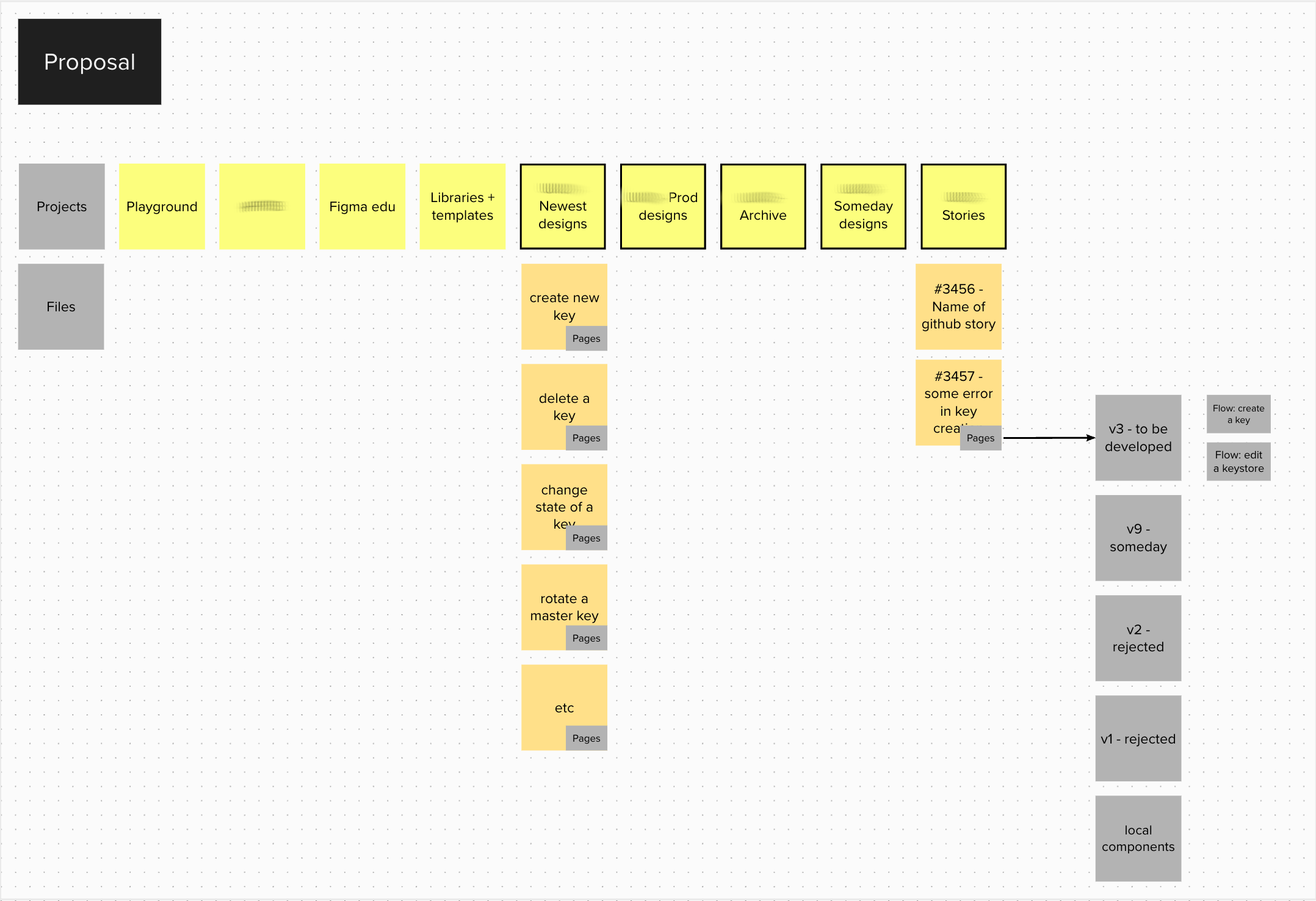
Rather than optimizing a broken structure, I redesigned the workflow around two explicit states of design work:
- Exploration (work in progress)
- Consolidation (validated decisions)
Guiding principles:
- Reduce cognitive load through structural clarity
- Separate exploration from documentation
- Make source of truth explicit and auditable
- Optimize collaboration for scale, not convenience
Collaborative Refinement
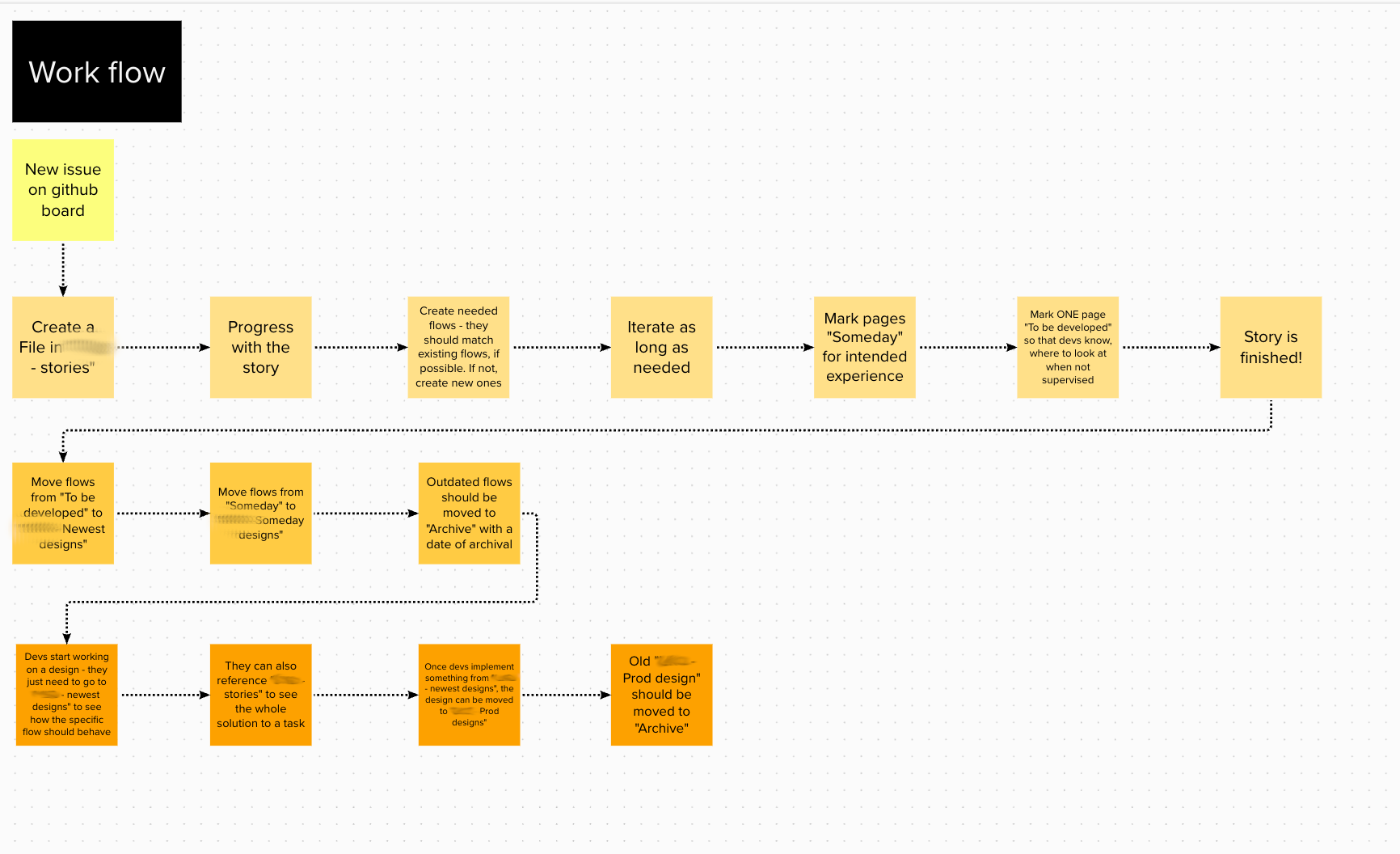
The initial structure was tested with the design team through workshops and iteration sessions.
The focus was on:
- Validating mental models across designers
- Identifying friction in daily usage
- Simplifying navigation between design states
- Aligning terminology and structure across teams
This phase revealed that adoption would depend more on clarity of mental model than tooling changes.
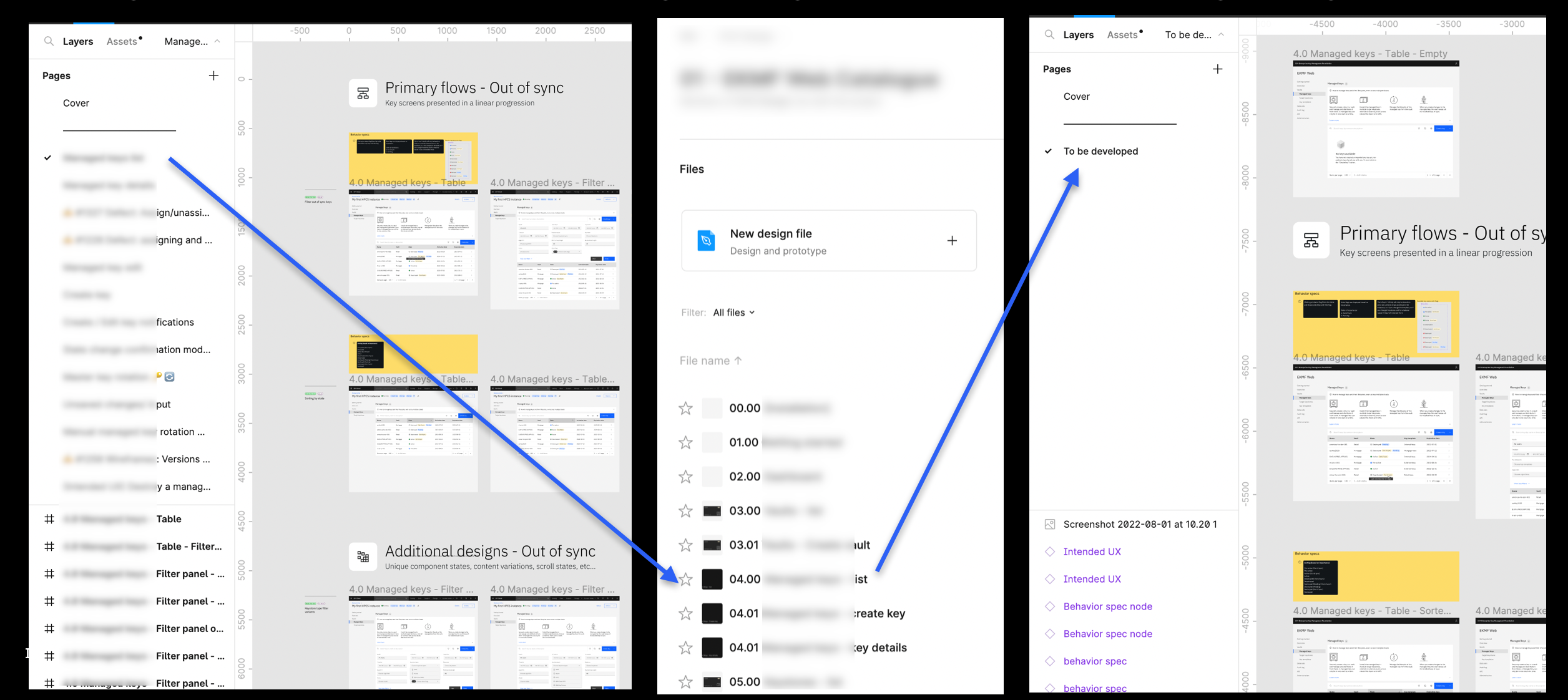
The Solution: Two-Project System
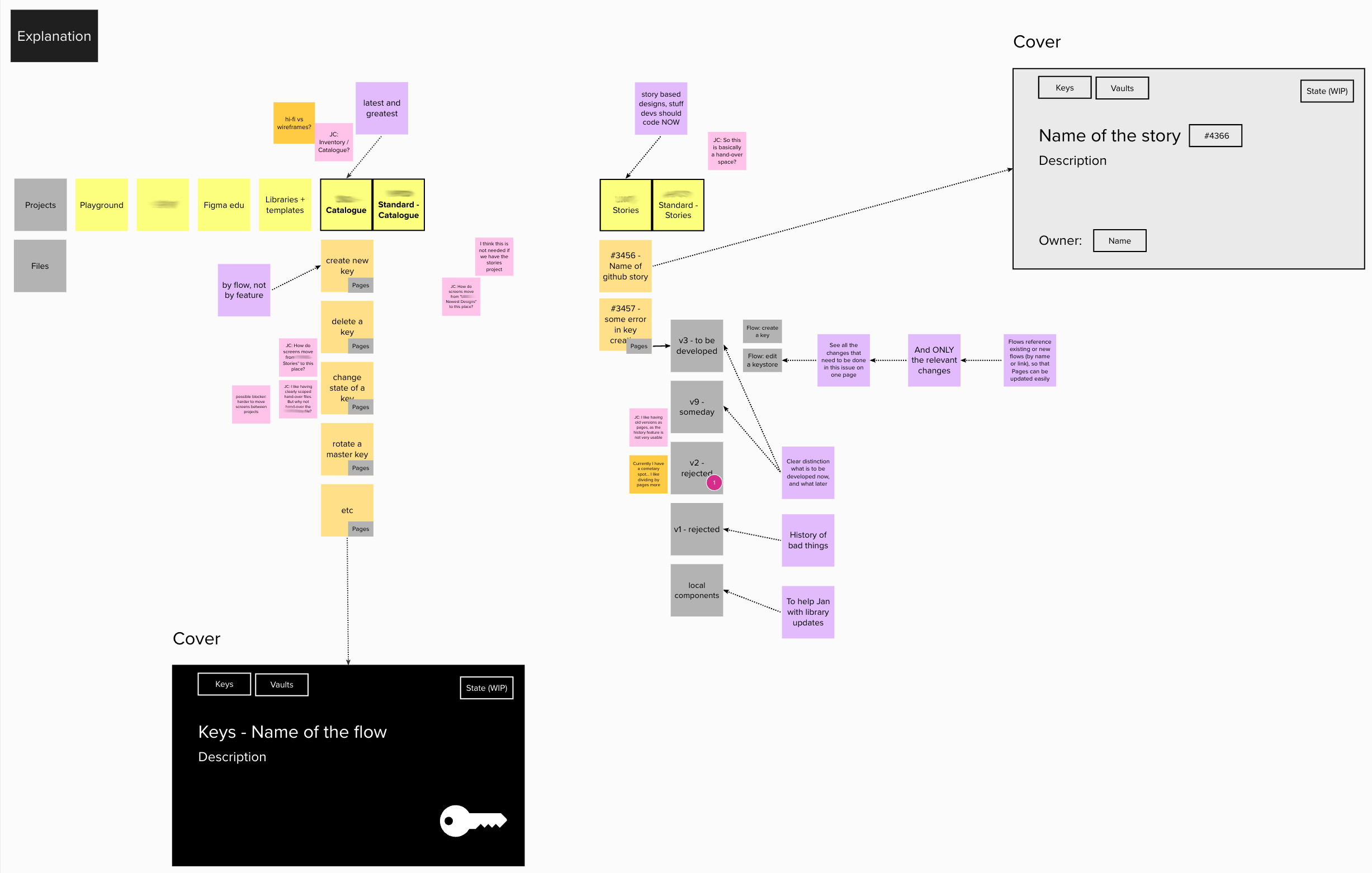
The final model introduced a deliberate separation of concerns:
Catalogue
A centralized layer of validated decisions serving as the single source of truth.
Stories
Active workspaces linked to specific tasks and ongoing exploration.
This architecture aligned design activity with product delivery and reduced ambiguity in ownership and versioning.
Implementation and Iteration
The model was rolled out incrementally and refined through live usage signals.
Iteration priorities focused on:
- Reducing navigation friction between work states
- Improving discoverability of validated decisions
- Optimizing file performance and maintainability
- Reinforcing consistent patterns across teams
Impact
The new operating model improved both design execution and cross-functional alignment:
- Clearer separation between exploration and final design decisions
- Reduced duplication and file fragmentation
- Improved navigation and discoverability of assets
- More stable collaboration across multiple designers
- Scalable structure applicable to different project types
The system remained in use and continued to evolve over time, confirming adoption durability beyond initial rollout.
Most importantly, it created clarity before commitment by separating assumptions, experiments, and validated decisions.
Key Learnings
- Workflow problems are often system design problems, not tooling problems
- Shared mental models are more important than file structures
- Separation of “thinking” and “documentation” reduces cognitive load
- Scalability requires explicit structure, not implicit conventions
- Adoption depends on clarity, not complexity